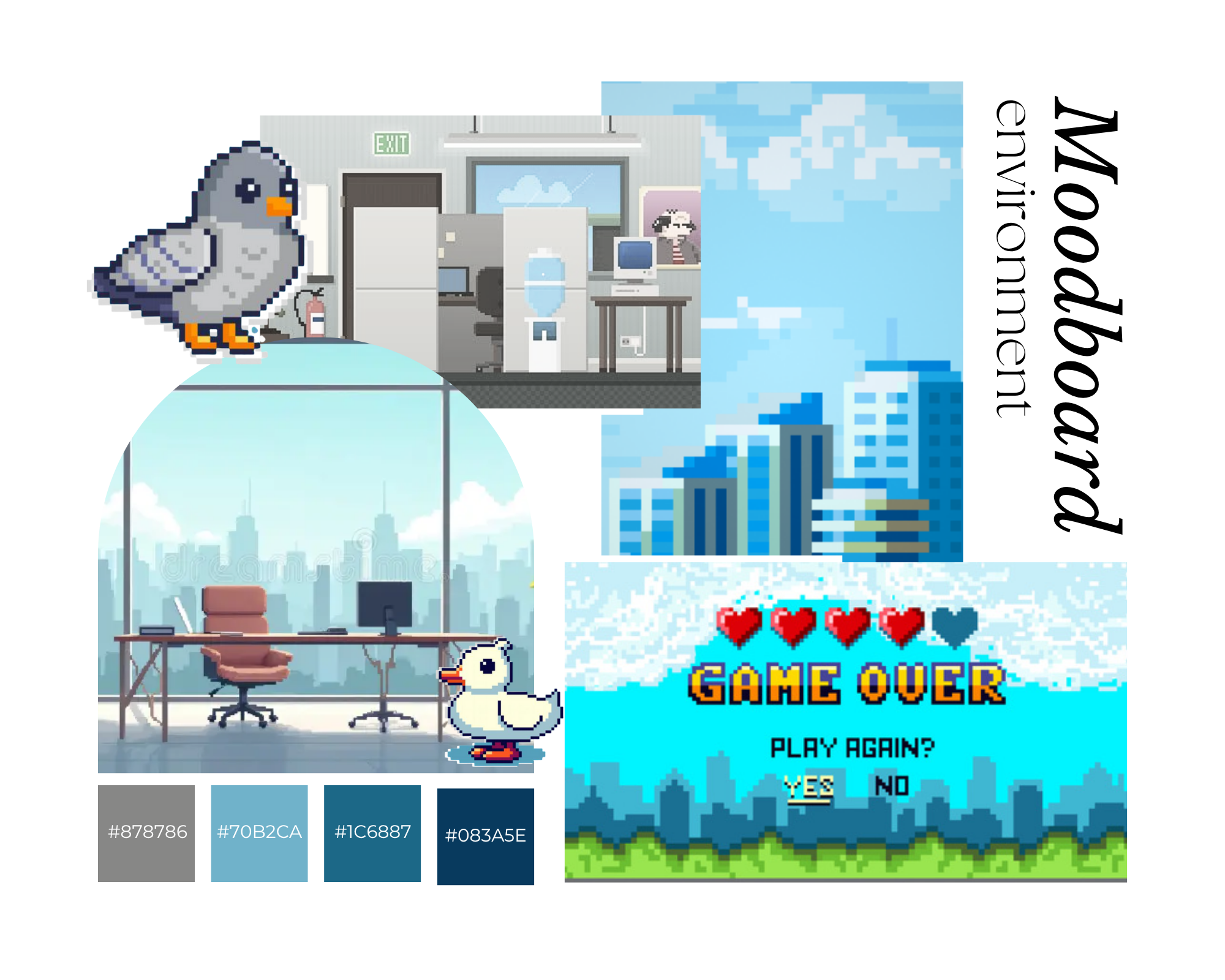
Moodboard and Inspiration
Development updates, changelogs, and release notes for Bird Corp
My initial game concept was structured around seven levels, each representing one of the world’s continents. The aim was to create a meaningful connection between gameplay and real-world issues, with each level featuring mini-games that explore technological and environmental challenges driving climate change.
I wanted players to experience the unique struggles faced by each continent and understand how these factors collectively contribute to global warming.
To make the experience more personal and thought-provoking, I envisioned the game being connected to the player’s actual household electricity usage. The higher the energy consumption at home, the less energy the player would have in-game to complete each level. This mechanic was meant to encourage players to reflect on their real-life environmental impact, linking their personal habits directly to the challenges they face within the game world.
Ultimately, the goal was to design gameplay that both entertains and educates, fostering awareness of how interconnected our actions are within the global environmental narrative.
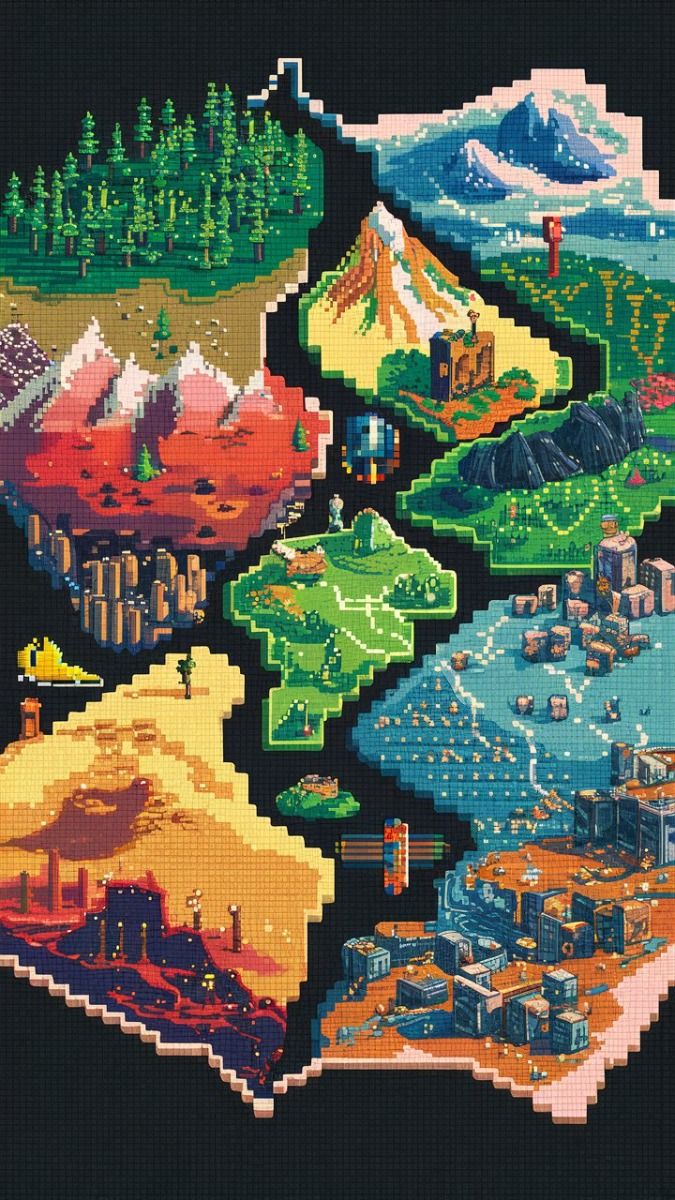
The aim of my game is to create an educational experience that goes beyond entertainment by raising awareness about global warming. I hope to design an experience that not only engages players but also encourages them to reflect on their role in addressing climate issues, adding meaningful value to their knowledge and perspectives.
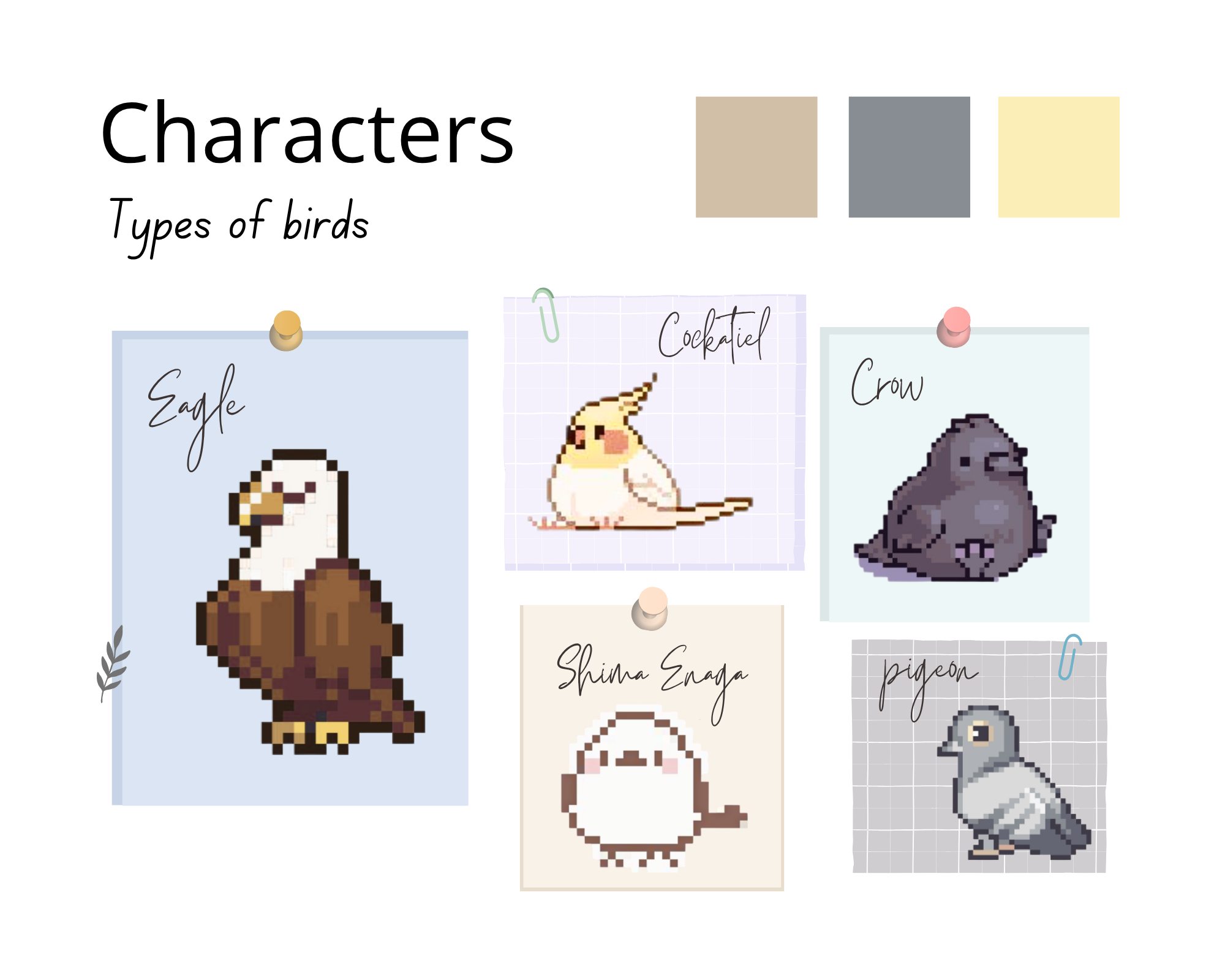
Once I figured out the topic of my game (which was about AI and the environment), I started making draft art for the game. And since I've always had a thing for pixel art, I knew the style my game would be in and made my first character, the Budgie.
Just for fun, I decided to put it in a suit, and thought it looked pretty cool. So I made a few more characters, then started thinking about the world they would inhabit - And that is when the idea of Bird Corp was started to take shape.
After some time, I started making simple idle and walk animations, backgrounds, and other assets in order to bring the world of Bird Corp to life.
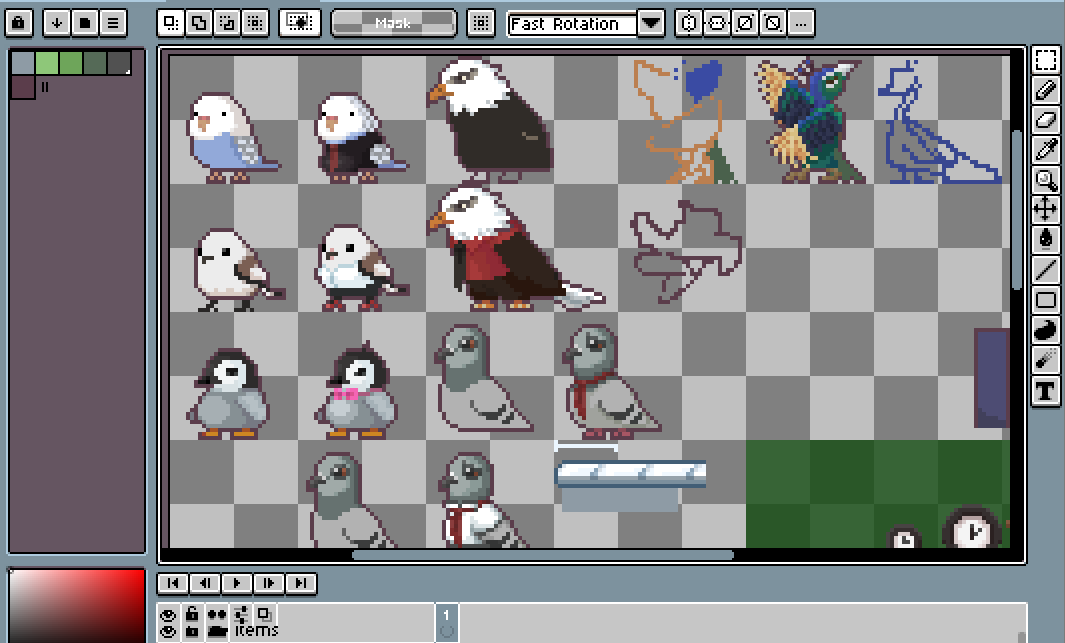
more birds!
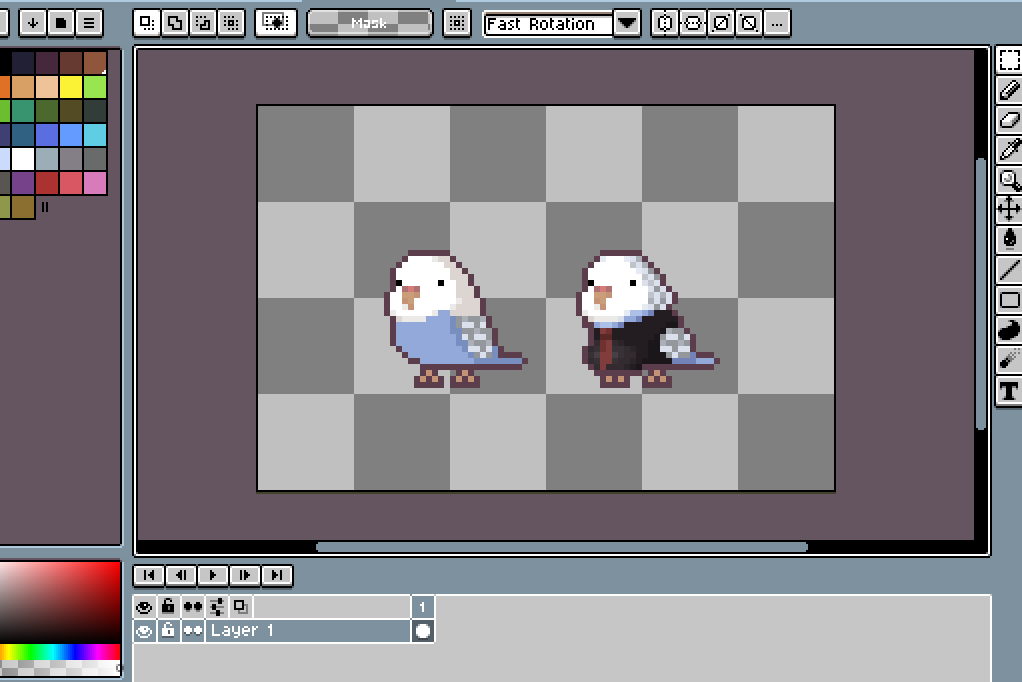
first and second budgie iterations
more birds!
After making the basic assets and knowing that I want a corporate aesthetic, I began working on solidifying the game mechanics and storyline. I wanted this to be a game that was not just educational, but also fun and engaging. This involved designing relatable minigames, and meaningful NPCs to keep players invested in the world of Bird Corp.
After some research and seeing nothing but praise for Godot, I decided to use it as the game engine for Bird Corp. Godot is an open-source engine known for its flexibility and strong community, which meant plenty of resources available for learning.
I started by following online tutorials to make the basics, and made this simple player scene with idle and walk animations, and tileset, both with collisions.
However, when I wanted to make an NPC scene, I came to a realization. Since there will be multiple NPCs, I was considering how best to implement the player states and came across this implementation called State Machines. What it does is that it allows you to manage different states (like idle, walking, talking, etc.) in a more organized way. This was a game changer for me, as it made handling the various NPC behaviors much simpler, but also meant that I had to change the way player was implemented because I want to keep the code consistent. I had to keep searching and trying different tutorials since some did not work for my project or were not beginner-friendly. But after a few days of trial and error, I finally got it to work, and was a great learning experience.
Next was cutscenes and I think I was overcomplicating things by thinking too much about the best way to implement it, plus it was also tough finding a tutorial suited for my project. But after more trial and error, I finally got it to work which was a huge relief. I was mulling over this for a week, gave up and worked on something else, felt like I was hitting a wall and doubting if I could actually make this game. But when I got it to work, I felt a huge sense of accomplishment and it reignited my confidence in finishing this game.
Other than cutscenes, I also had to figure out how I want to implement navigation in this game. Initially, I used the change to file scene method, but it was not suitable for my game.
In the beginning, whenever I've hit a roadblock, I would start
doubting if Godot was the right engine for me, and if I should
switch to something simpler with pre-built mechanics. But I
realized that this is a common feeling among beginners, and that
the key is to persevere and keep trying.
I also found that breaking down complex problems into smaller,
manageable tasks helped me tackle them more effectively. This
approach not only made the challenges seem less daunting but
also allowed me to make steady progress.